
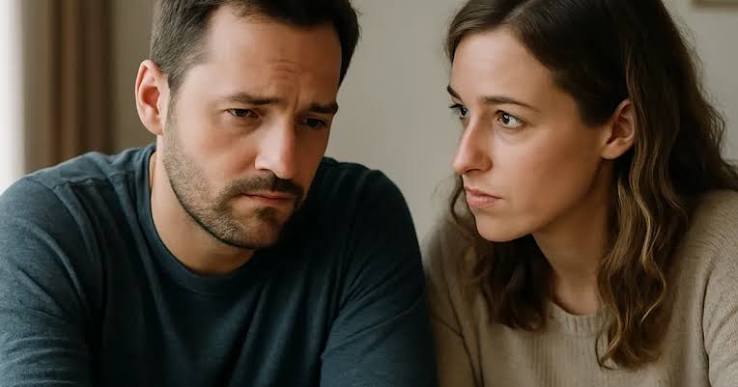
What is professional couples therapy?
Professional couples therapy is structured, skills-based support that helps partners communicate, understand patterns, and rebuild trust.
You love each other, yet the same argument returns every week.
You both want to be heard, but end up defending yourselves.
One of you withdraws; the other pushes harder.
You leave the conversation more distant than before.
You wonder whether this is simply how your relationship is, or whether something can actually change.
Professionel parterapi is designed for exactly this reality.
The familiar pattern
Many couples fall into a cycle that feels impossible to escape. One partner brings up a concern, the other hears criticism. The first partner feels unheard and tries again, louder this time. The second partner feels attacked and either argues back or shuts down.
Over time, the topic matters less than the pattern. Money, chores, parenting, intimacy or time together become triggers for the same old dynamic. You may even start avoiding certain subjects to keep the peace, but the distance grows anyway.
The crucial shift
The turning point is not to find out who is right. It is to change the way you talk when you disagree.
In my work as a couples coach, I focus on three things:
- A clear structure for difficult conversations.
- A language that reduces blame and increases responsibility.
- Practical exercises you can use at home between sessions.
This is what professionel parterapi looks like in practice: less guessing, more guided practice.
What you can do right now
You do not need to wait for the first session to begin changing the pattern. Try these simple steps:
- Agree on a time to talk.
Do not start a heavy conversation when one of you is tired, stressed or distracted. Ask: “Is now a good time to talk about something important?” - Speak in short sentences from yourself.
Use “I” statements: “I feel…”, “I need…”, “I worry that…”. Avoid long speeches and avoid “you always” or “you never”. - Listen and reflect back.
The listener repeats what they heard in their own words: “I hear you saying that you feel alone when I work late.” This is not about agreeing, but about showing that you understand. - Switch roles.
After the first person has spoken and been heard, the other person shares their perspective on the same situation. - End with one small agreement.
Choose one concrete change for the coming week. It should be small, realistic and specific.
These steps are part of a larger method I call the Appreciative Self-Responsible Dialogue, but even used on their own they can interrupt the usual cycle of attack and defence.
Perspective and hope
Many couples believe that love should be enough. In reality, love needs skills. Communication can be learned. Patterns can be changed. Trust can be rebuilt.
You do not have to solve everything in one conversation. You only need to take the next step differently from last time. With practice, the same situations that used to lead to conflict can become opportunities for connection.
That is the heart of professionel parterapi: not to fix you as individuals, but to give you a shared language and a reliable way to handle differences without losing each other.


